CropForce One Specific FAQ
Do you provide the chemical?
We can apply customer-provided chemical or work with you and your agronomist to ensure the correct product applied. All applications must follow label and regulatory requirements.
Is drone spraying accurate?
Yes — spray drones provide highly consistent application with controlled droplet size, flight paths, and GPS-guided coverage.
What types of land do you spray?
Pasture, rangeland, aquatics, and select crop applications — as well as difficult areas like waterways, ditches, fence lines, and pivot corners.
How much does it cost?
Pricing depends on acreage, location, chemical type, terrain, and time required. Contact us to discuss options.
What areas do you serve?
We primarily serve Thayer County, Nebraska and surrounding counties — but we can travel depending on job size and schedule.
Aerial Drone Spraying FAQ
What Is Aerial Drone Agricultural Spraying?
Aerial drone agricultural spraying is a method of applying crop treatments using small, unmanned aircraft instead of ground rigs or traditional airplanes. These spray drones fly low and slow over the field, applying material precisely where it’s needed.
For local farmers, this means another tool in the toolbox, especially when ground access is limited or timing matters.
How Spray Drones Work
Spray drones are equipped with tanks, pumps, and spray nozzles, much like traditional sprayers. Before a flight, the field is mapped and the application plan is set based on crop type, product, and conditions.
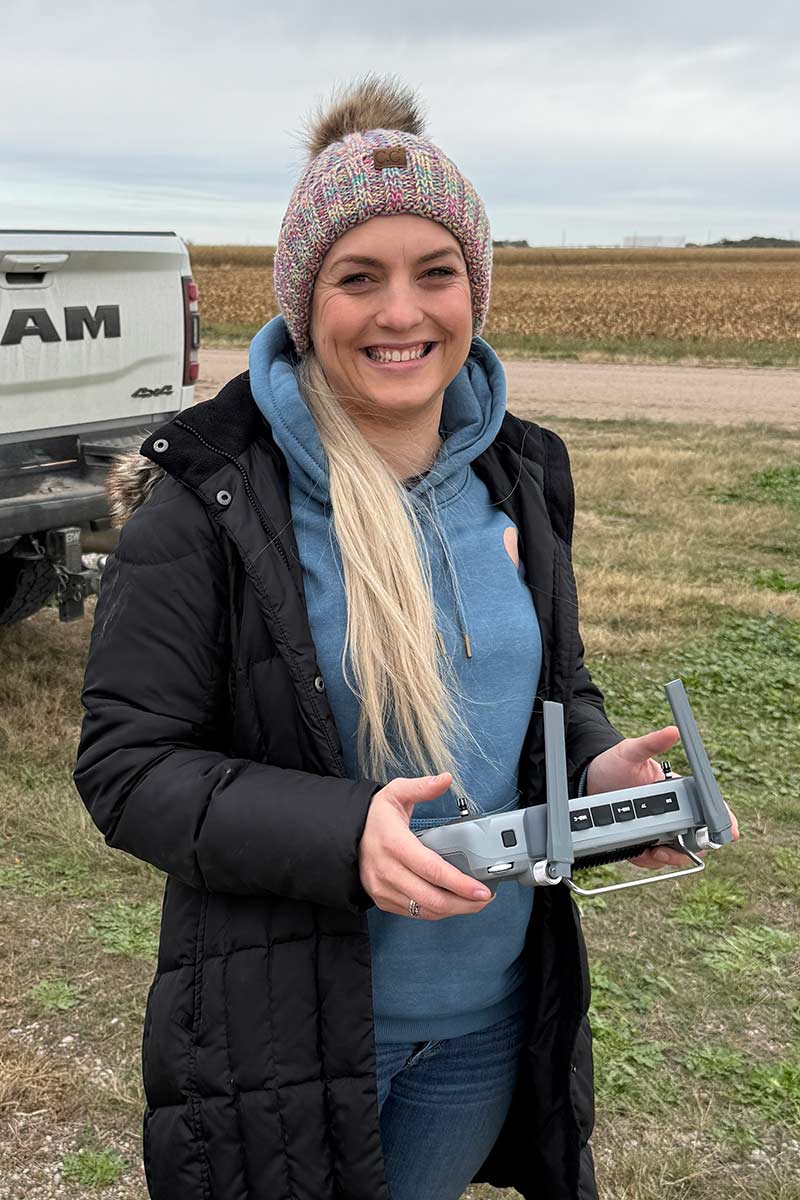
During application, the drone follows a programmed flight path while the operator monitors the spray rate, height, and coverage. The drone flies just above the crop canopy, allowing for accurate placement and reduced drift.
Because the drone is airborne, there is no equipment touching the field and no risk of ruts or crop damage.
What Can Be Applied With a Spray Drone?
Drone spraying is commonly used for:
- Herbicides for spot or targeted applications
- Fungicides and crop protection treatments
- Pasture and rangeland applications
- Edge rows, waterways, terraces, and buffer areas
Drones are especially effective for smaller or irregular fields where traditional equipment may be inefficient or impractical.
Why Farmers Are Using Spray Drones
Many farmers are turning to drone spraying not to replace existing methods, but to solve specific problems.
Access When Fields Are Wet
When ground rigs can’t get into a field without causing damage, drones can still operate safely from the field edge.
No Soil Compaction or Crop Damage
Since the drone never touches the ground, there are no ruts, crushed plants, or compacted soil.
Precision Where It Matters
Spray drones are well suited for spot spraying, edge work, and problem areas. This helps reduce over-application and wasted product.
Better Timing
Crop treatments often depend on narrow windows. Drone spraying allows for fast response when conditions line up.
How Drone Spraying Fits Into Local Farming
Drone spraying works best as a complement to traditional spraying methods, not a replacement for them.
For many local operations, it’s used for:
- Wet seasons when ground access is limited
- Smaller fields that don’t justify large equipment
- Sensitive areas near waterways or property lines
- Late-season applications in tall crops
Because the operator is local, decisions are made based on real field conditions, not a one-size-fits-all approach.
Safety, Licensing, and Oversight
Agricultural spray drones are operated under strict guidelines. Operators must be properly trained and licensed, and applications follow state and federal regulations.
Flights are planned around weather conditions, wind speed, and surrounding land use to ensure safe and responsible application.
Is Drone Spraying Right for Every Field?
Like any application method, drone spraying isn’t the right solution for every situation. Field size, crop type, product, and conditions all play a role.
That’s why many farmers choose to discuss their field and goals before deciding if drone spraying makes sense for their operation.
A Practical Tool for Modern Farming
Aerial drone spraying offers farmers a practical, flexible option for precision application. It reduces field damage, improves access, and provides another way to protect crops when timing and conditions matter.
For local farms, it’s not about new technology for the sake of technology. It’s about having the right tool available when you need it.